
(Mission and Education Cooperation)
CENTRAL COAST, NSW — Leaders across Oceania are continuing to explore deeper cooperation between mission and theological education, seeking practical ways to utilise educational platforms and theological resources to strengthen gospel expansion, leadership formation, and long-term mission development throughout the region.
Theological Education for Worldview Shaping
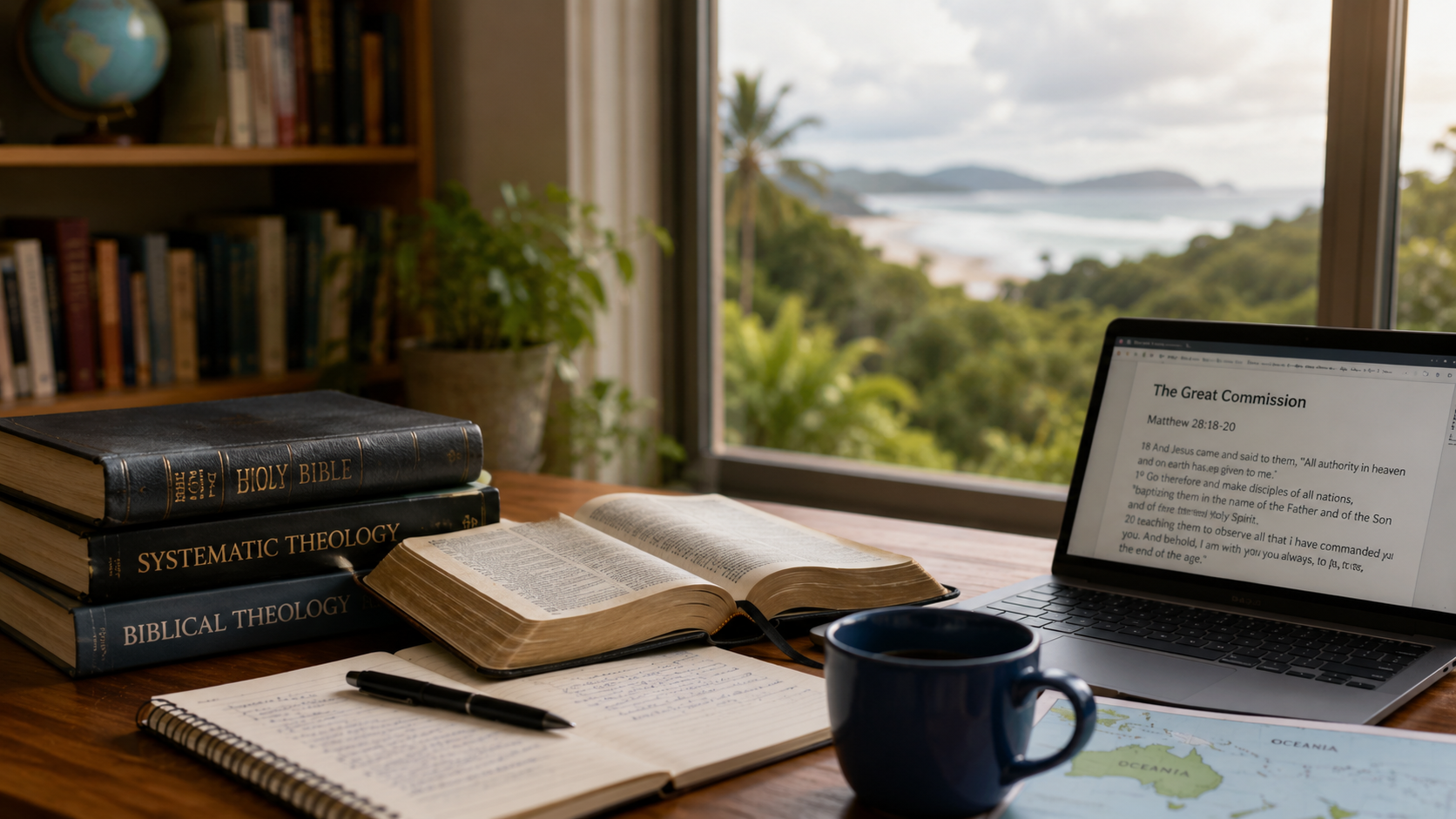
At the centre of these discussions is the role of theological education in serving not only formal ministry students, but also the wider mission movement. Leaders emphasise that theological training plays a vital role in shaping worldview, strengthening biblical thinking, and equipping workers to engage effectively in frontier mission contexts.
Olivet Theological Seminary, together with related educational initiatives across the Pacific, has been identified as one of the key platforms supporting this vision.
Theological Education Integrated with Mission Practice
Theological education is understood not merely as academic study, but as a process of formation for mission. It is described as shaping workers spiritually and intellectually, building biblical worldview, and fostering long-term fellowship and cooperation among ministers and missionaries.
Students engaged in theological training come from diverse backgrounds, including those with prior ministry experience and those newly entering ministry preparation. Many have testified that structured theological study has helped them organise and deepen their understanding of Scripture, enabling clearer and more systematic articulation of their faith.
Leaders also note that disciplined learning environments, including reading, writing, and assessment, encourage deeper engagement with biblical and theological reflection. At the same time, curriculum development continues to be reviewed to ensure a strong biblical foundation while maintaining balance in academic workload.
Emerging areas of development include the responsible integration of technology in learning environments, including AI-assisted tools used to support discussion and critical thinking. These tools are being explored as aids to learning, without replacing spiritual discernment or independent theological reflection.
Supervised ministry remains an essential component of formation, linking academic study with practical mission involvement. This integration is viewed as a key bridge between theological reflection and real-life ministry practice.
Theological Education as Mission Initiatives Beyond the Seminary
In addition to formal training, leaders are developing wider educational initiatives aimed at extending theological engagement beyond seminary students. Workshops and short courses are being designed to help members and leaders strengthen biblical thinking and develop a more mission-oriented and globally aware Christian worldview.
Educational initiatives in Pacific regions are also being explored as platforms for sustainable mission engagement and community connection, particularly in contexts where education provides an accessible and recognised avenue for long-term ministry presence.
Through these ongoing efforts, leaders express the hope that mission and theological education will continue to work closely together for the strengthening of the Church and the advancement of the Gospel across Oceania and surrounding regions.