
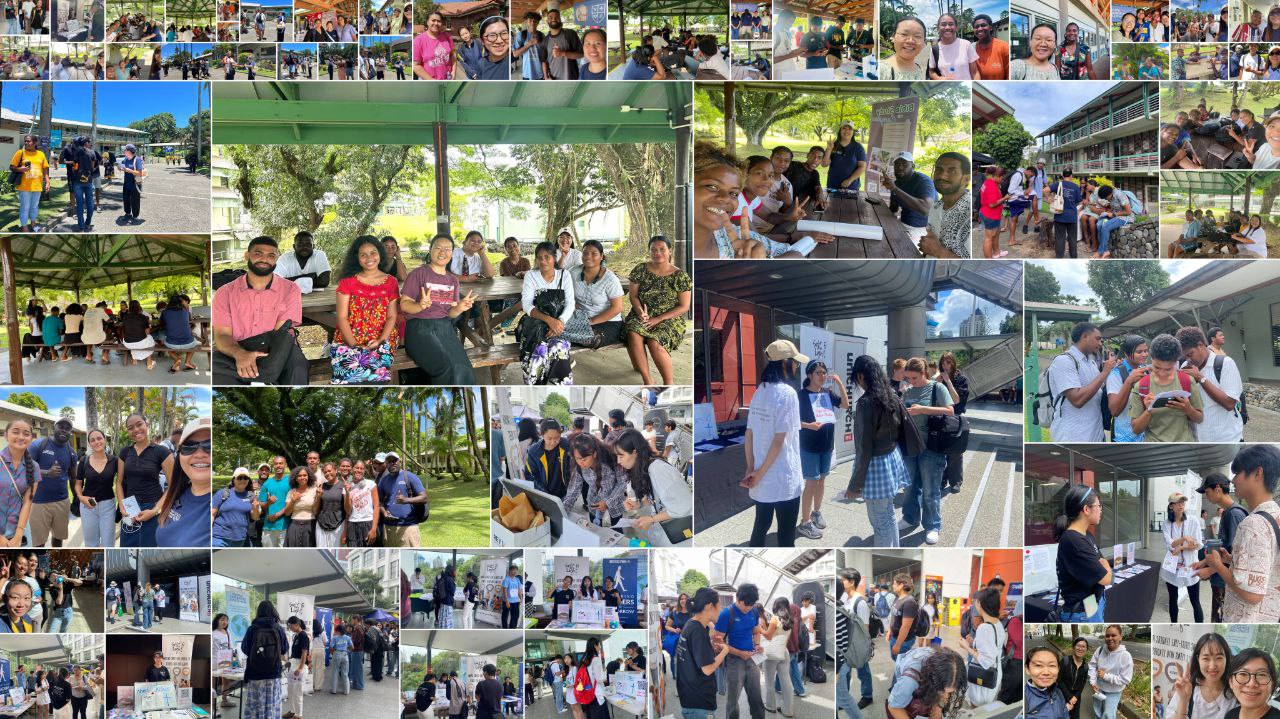

Olivet Assembly Oceania recently shared a summary of campus outreach activities conducted during the university orientation season in New Zealand and Fiji. The two-week orientation period provided a valuable opportunity for engaging students and introducing Christian fellowship and Bible study opportunities to a large number of young people on campus.
During the outreach, volunteers organized information stalls and participated in campus roaming evangelism, speaking with students and offering encouraging Bible verses. In New Zealand, four days of outreach resulted in 86 new club sign-ups, an amount that would normally take several months to gather through regular street evangelism. In Fiji, the response was even larger. Over five days of stall evangelism and five days of campus outreach conducted through the campus club, about 1,000 club sign-ups were collected, equivalent to roughly two years of ordinary individual street evangelism outreach.
One of the encouraging aspects of the orientation outreach was the openness of students to conversations about faith. Many students approached the stalls to make enquiries, while others expressed appreciation for the Bible verses that were shared with them. Some students remarked that the verses spoke directly to their personal situations, opening meaningful conversations about faith and life.
The outreach also integrated both in-person and online engagement. As students connected with the campus team, many followed the ministry’s social media platforms, significantly increasing online subscriptions and allowing continued communication beyond the initial meeting. These online channels are expected to play an important role in maintaining relationships with interested students.
The presence of the campus club also provided opportunities to interact with other Christian clubs and student groups. Through these interactions, friendly relationships were built, and the volunteers received encouragement through fellowship with fellow believers on campus.
With the large number of contacts gathered during orientation, the next stage of the ministry focuses on follow-up. Unlike smaller-scale outreach, mass evangelism requires consistent communication and organized efforts to maintain contact with students who have expressed interest. In Fiji, volunteers have already begun reaching out individually to many of the contacts. Social media updates, newsletters, and invitations to activities will also be part of the follow-up process.
A retreat has recently been organized in Fiji as one of the follow-up events, although participation is still gradually developing. Previous experience in New Zealand has shown that it may take several weeks of consistent communication before students begin attending Bible studies or ministry events.
Leaders shared that campus club outreach is a long-term process that requires patience and careful stewardship of the contacts gained during orientation. They expressed hope that, over time, local students will become more actively involved in organizing activities and eventually take leadership roles, including facilitating Bible studies for their peers.
As university environments in many places become increasingly secular, Olivet Assembly Oceania continues to pray that more cities will establish campus-based clubs to maintain a visible and welcoming presence for students seeking faith, fellowship, and meaningful conversations about life and purpose.